One of Canada's Largest Independent Education Publishers Turns a Page


The OER Observatory aggregates and displays OER-related news and content from third-party sources worldwide. This content is not produced by UNESCO or the OER Dynamic Coalition. All rights and responsibility for the original content remain with the respective authors and publishers. The inclusion of third-party content in the Observatory does not imply endorsement by UNESCO or the OER Dynamic Coalition. Users can access the original source through the link provided with each item.
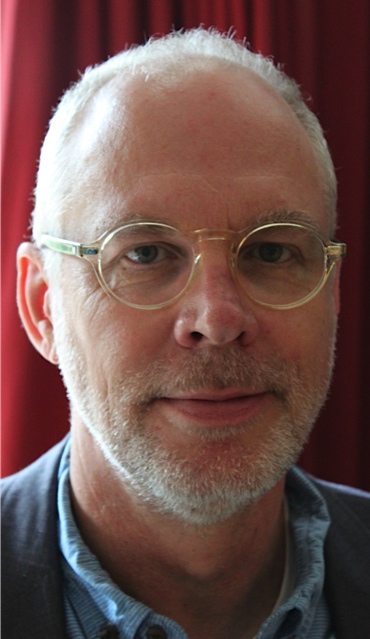
Glenn Rollans has become CEO and majority shareholder of Broadview Press, the independent academic publisher based in Peterborough, Ontario. The transaction, which the company described as long-planned, closed on September 29. Rollans bought 85% of the shares.
Rollans is well known in Canada. A past president of the Association of Canadian Publishers, he co-owns Brush Education, a college and university textbook house, and owns Freehand Books, which Broadview launched as a literary imprint in 2011 and which Rollans acquired in 2021. Both are distributed by University of Toronto Press.
Speaking with PW, Rollans emphasized that the deal was about continuity, not consolidation. Broadview is "a really solid, strong company with a great record, great list, lots of adoptions across the continent," Rollans said, and "the first task is to build on that rather than to disrupt it."
He plans to run the businesses independently, and Broadview's management team is staying on: Stephen Latta as president, Marjorie Mather as VP of editorial and production, and Christine Handley as VP of sales and distribution. The company's other 30 employees also remain. Founder and former CEO Don LePan will remain a part-time employee for a short period and will continue on the board of directors.
Founded in 1985, Broadview releases upward of 30 titles annually and maintains a backlist of more than 900. Exports account for over half of its revenue, which runs to about $5 million a year. "I think of the North American market as a whole," Rollans said, noting that the company's sales and its list span both sides of the border. Literature in English is the core of the list, and its bestselling title by far is the Broadview Anthology of British Literature and its spin-off versions. History, philosophy, and composition round out its four largest subject areas.
Many backlist titles have small annual sales, Rollans acknowledged, but they still serve the people who use them. That's especially true of the Broadview Editions series, which runs to hundreds of critical editions of full works, from Austen and Dickens to less frequently taught books such as The Diary of a Nobody by George Grossmith and Weedon Grossmith. Some feature "important racialized authors or equity-seeking authors that aren't published in other places," he said. "So it's really important to keep the whole list active."
Copyright and AI
Canada has had a somewhat contradictory relationship with copyright when it comes to educational publishing. In 2012, Ottawa added "education" to the Copyright Act's fair dealing exceptions; since then, the education exception has let universities and schools largely stop paying to copy publishers' work. Access Copyright, the nonprofit that licenses the copying of published works in English Canada, estimates the losses to creators and publishers at C$200 million.
Rollans has long been an advocate for authors on copyright, through the ACP and the International Publishers Association, and he sees the field as under pressure worldwide. Artificial intelligence presents a challenge on two fronts: unlicensed scraping and the question of how publishers will relate to AI as a potential author or instructor. In his view, copyright "is being treated more and more as kind of the poor cousin of intellectual property," and "as an instrument of AI policy rather than a valuable area of IP in itself." Yet it remains "the basic infrastructure for our industry." Under the Berne Convention, "when you create something you own it," he noted. "We can't support a business that's based on selling stuff if we can't assert our ownership to the stuff."
Class actions over AI training are now underway in Canada, with authors and publishers among the lead plaintiffs, but Rollans doubts the courts will resolve the matter. "Litigation is such a slow way of getting around things," he said, pointing to Bartz v. Anthropic, which ended in a settlement rather than a decision. Government should set guardrails, he argued, and the benefits of AI for publishers remain unproven: "It's less than convincing that AI solutions are going to be better than spreadsheet solutions for a lot of these tasks, or that they're going to be as trustworthy as human solutions."
Defending the textbook
Textbooks and other books encountered in schools are, for some people, "their only experience of books in their whole life." In a "really chaotic information universe," textbook choices are sometimes framed as "the choices of a bully," Rollans said. "I think they're really more the choices of a guide." Scholarly apparatus such as annotations and introductions serve as guideposts; for some students, "that takes like a fish hook and you're on it for the rest of your life."
Good course materials are "this incredible leveler of a student experience," particularly now that "you are almost never in a classroom with an instructor whose sweet spot is what they're teaching you." Open educational resources compete with Broadview, but they are often "underfunded at the front end and they're treated like a project rather than a process," Rollans said, with no revenue to support revision. Broadview's approach is to develop slowly, stay in the market a long time, and take titles through multiple editions.
Broadview is tiny compared with education publishing giants such as Cengage, Norton, Pearson, or Wiley. But, Rollans said, it is among the largest independents in English-speaking Canada, where university presses hold the biggest share of the market. The company has persisted because "it's really developed a niche that's hard to push it out of."
Rollans is aware some may see his acquisition as a form of consolidation, with him cast as "the Pac-Man eating up the other dots," but said colleagues have been supportive. He hopes the deal will add "some juice to the optimism in the industry."
Rollans is sanguine about the future of the book business. "Unlike other industries, such as technology or energy, publishing has less room for quick profit," Rollans said. "So you have to be intrinsically interested in it to stick with it, which I am."